



Golden Window Saves Life: SMHRC Doctors Reverse Stroke Symptoms in 66-Year-Old Patient
March 17,2026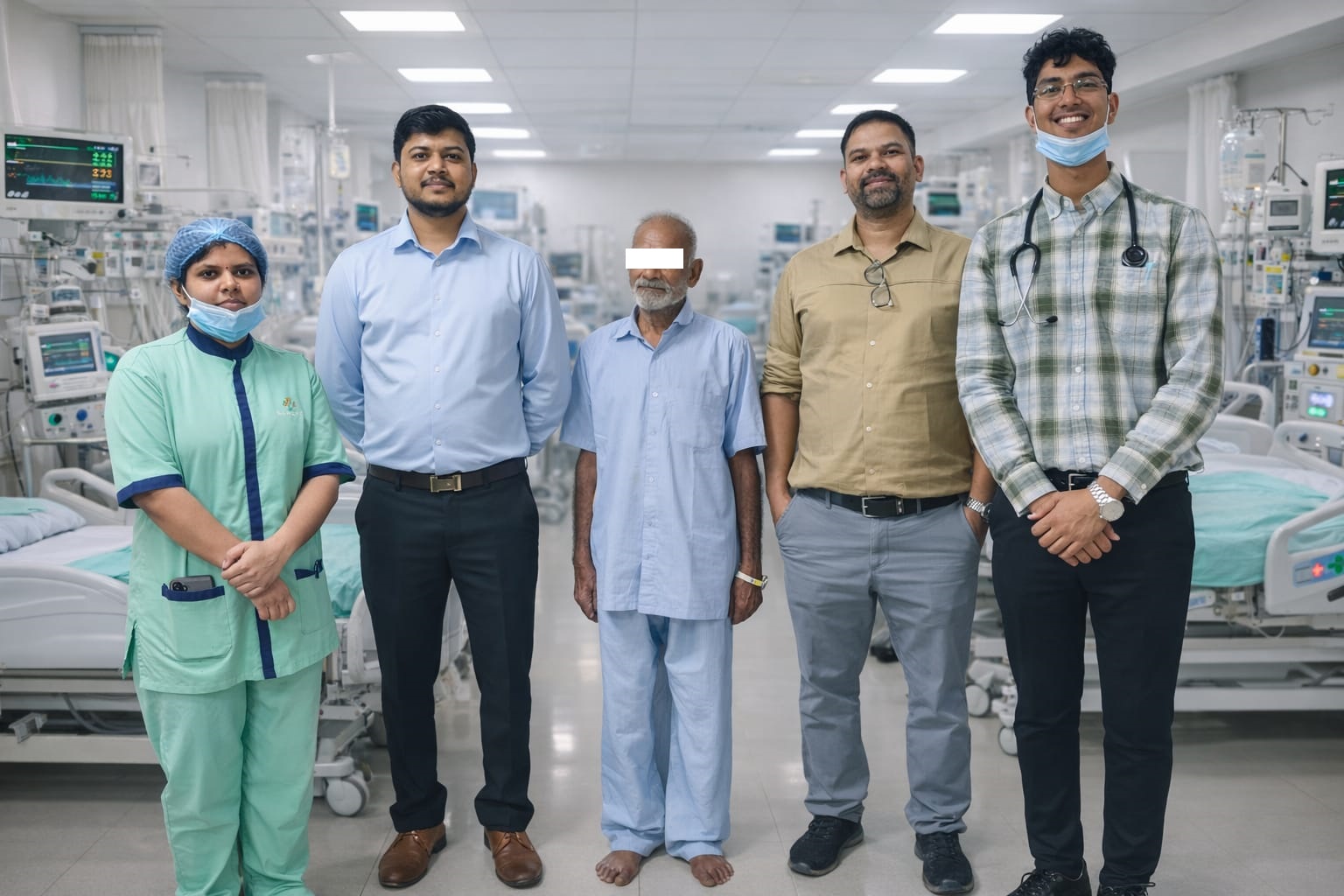
A 66-year-old male from Nagpur suffering from Acute Ischemic Stroke was successfully treated at Dr. Babasaheb Ambedkar Super Speciality Institute, the dedicated super speciality wing of the 1020-bedded Shalinitai Meghe Hospital and Research Centre (SMHRC), Wanadongri, Nagpur. The patient reached the hospital within the critical “Golden–Period” of stroke management, which is crucial for preventing permanent brain damage and disability.
The patient arrived at the Emergency Department with complaints of weakness on one side of the body and difficulty in speaking. A rapid clinical assessment was carried out by Dr. Ujjwal and the Emergency Medicine team. An urgent Magnetic Resonance Imaging (MRI) of the brain revealed hyper-early acute infarcts with thrombotic occlusion, confirming the diagnosis of ischemic stroke. After consultation with Neurologist Dr. Jivan Kinkar and Interventional Radiologist Dr. Nikunj Choudhary, the patient was immediately admitted to the Medical Intensive Care Unit under the care of Neurologists Dr. Jivan Kinkar and Dr. Sanchit Chouksey.
Considering the time-sensitive nature of stroke care and the need for intervention within the Golden–Platinum therapeutic window, the medical team promptly administered Tenecteplase, a clot-dissolving thrombolytic injection used for emergency stroke management. Following the treatment, the patient showed significant improvement. Initially unable to speak and with reduced limb strength, his condition improved steadily with intensive monitoring and treatment in the ICU. By the second day, his speech began to recover and limb power improved, enabling him to communicate effectively.
The treatment reflected the coordinated efforts of Consultant Neurologists Dr. Jivan Kinkar and Dr. Sanchit Chouksey along with the Emergency Medicine and ICU teams.
Dr. Jivan Kinkar emphasized that stroke is a medical emergency and that immediate medical attention within the Golden period significantly improves chances of recovery and prevents long-term neurological disability.
Dr. Vasant Gawande, Chief Medical Superintendent, SMHRC, conveyed that the critical care management was supported by Dr. Rakesh Bhaisare (HDU In-charge), Dr. Amit Suthar (CCU In-charge), Dr. Amit Kothari (EMD Specialist) and Intensivists Dr. Samruddhi Tayade, Dr. Rahul Daga, Dr. Anitabh Sukhdeve, and Dr. Masum Biranjan, with 24×7 supervision from residents Dr. Ratan, Dr. Dhananjay, Dr. Ujjwal, Dr. Chaitanya, and Dr. Prachi. Dedicated nursing care was provided by Sr. Premshila, Br. Dhananjay, and the nursing team, ensuring continuous monitoring and compassionate patient support.
Administrative coordination and non-clinical support were provided by Dr. Noorul Ameen, Administrator-DBASI, along with Mr. Pawan Chafle, Floor Manager. The patient’s relatives appreciated the hospital team for their prompt action, coordinated care, and timely life-saving intervention.
Dr. Anup Marar, Director, Nagpur Campus of DMIHER(DU), stated that the successful management of this case highlights the hospital’s commitment to rapid stroke recognition and treatment within the Golden period, supported by advanced stroke care protocols, multidisciplinary expertise, and high-end diagnostic facilities such as CT and MRI available under one roof. He added that SMHRC is well equipped to manage neurological emergencies including Neurology and Neurosurgery, ensuring faster diagnosis and immediate intervention for critical conditions like stroke.
Dr. Nilesh Agarwal, COO (Clinical Administration), DMIHER(DU), added that being a National Medical Commission recognized postgraduate institute with a full-time hierarchy of trained specialists, SMHRC delivers comprehensive clinical care supported by modern infrastructure and academic expertise. He further stated that government healthcare schemes are applicable at SMHRC, making advanced treatment accessible to patients. The consistently high occupancy in the 65-bedded Critical Care Unit reflects the trust and goodwill earned by SMHRC, where approximately 170–190 admissions are undertaken daily, demonstrating the institution’s capacity to manage complex and emergency cases effectively.