



Wockhardt Hospitals’ Oncology Experts Highlight Lack of Early Symptom Awareness behind Advanced Cancer Cases in Nagpur
January 30,2026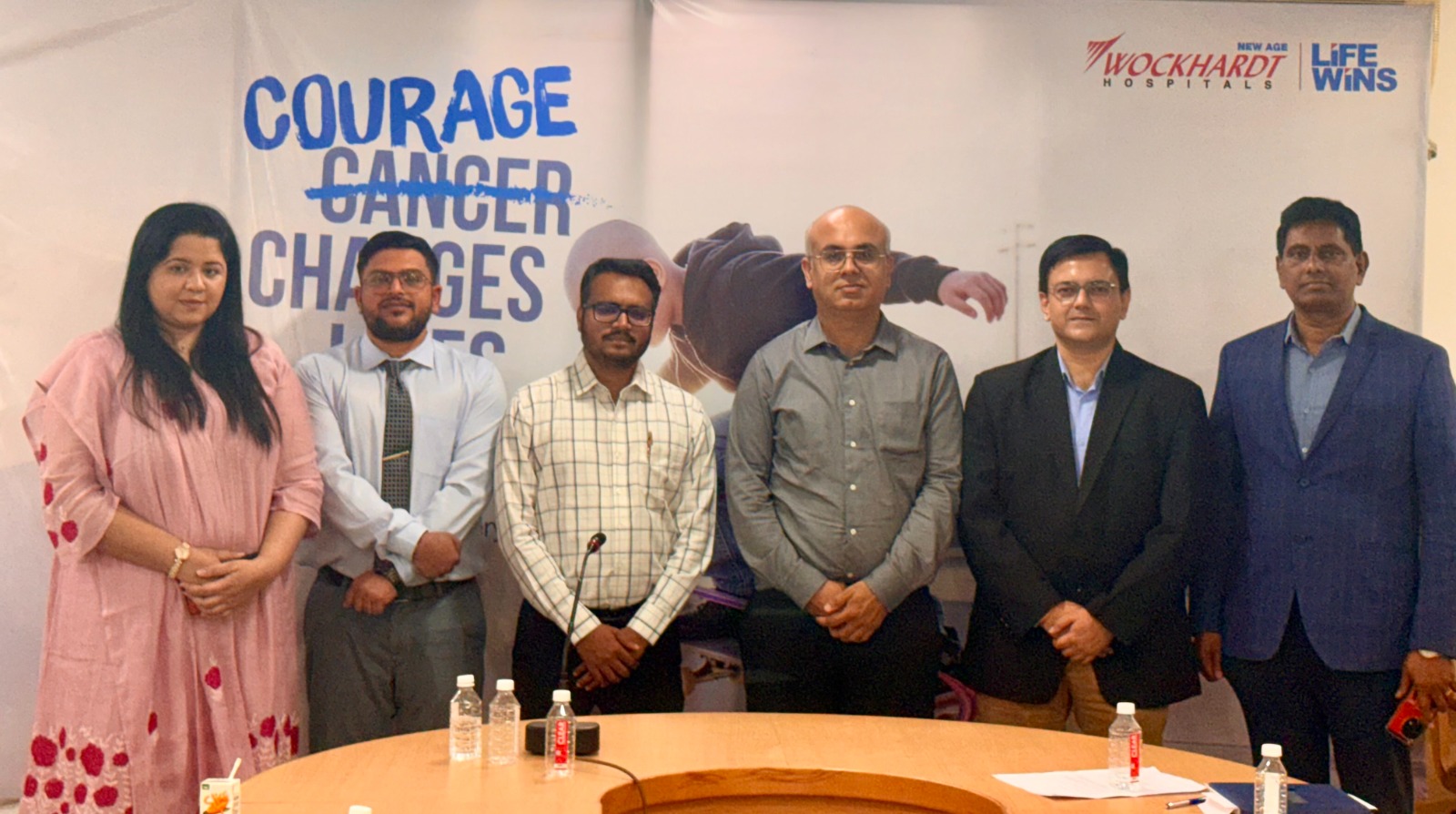
Nagpur: On the occasion of World Cancer Day, Wockhardt Hospitals held a media interaction in Nagpur where its oncology specialists highlighted the growing importance of cancer awareness, early detection, and timely access to quality cancer care for the people of Nagpur and surrounding districts of Vidarbha.
The doctors noted that Nagpur and nearby regions continue to report a high number of cancer cases at advanced stages, primarily due to delayed diagnosis, lack of awareness about early symptoms, and myths associated with cancer treatment. The interaction was organised to address these challenges by focusing on cancer prevention, myth versus fact, early screening, comprehensive treatment, and survivorship.
Aligned with the global World Cancer Day theme, “United by Unique – Every Cancer Journey Deserves Personalised Care,” the experts emphasised that modern cancer care requires a personalised, multidisciplinary approach rather than a one-size-fits-all solution.
The panel included Dr. Rahul Arora, Hematologist; Dr. Sagar Bhalerao, Surgical Oncologist; Dr. Kapil Raut, Medical Oncologist; and Dr. Shefali Chauhan, Gynecologist, along with Dr. Saurabh Nagar, Center Head, Wockhardt Hospitals. The team discussed cancer patterns commonly seen in the Vidarbha region, early warning signs, advances in oncology treatment, and long-term survivorship care.
Speaking at the interaction, Dr. Saurabh Nagar, Center Head, Wockhardt Hospitals, said,“In Nagpur and the wider Vidarbha region, we frequently see patients approaching hospitals at later stages of cancer, which impacts treatment outcomes. At Wockhardt Hospitals, we have established a comprehensive oncology program supported by state-of-the-art infrastructure, advanced diagnostic and treatment technologies, and an experienced multidisciplinary team of oncology specialists. Our focus is on delivering evidence-based, personalised cancer care while ensuring that patients in this region have access to expert doctors and comprehensive treatment under one roof.”
Dr. Rahul Arora, Hematologist, speaking on blood cancers, said,“Blood cancers often begin with subtle and non-specific symptoms such as persistent fatigue, frequent infections, unexplained anemia, or prolonged fever, which are commonly ignored or attributed to routine health issues. In regions like Nagpur and surrounding districts, delayed evaluation often results in patients presenting at advanced stages. Early diagnosis through timely blood investigations and access to specialised hematology care are crucial. With advancements in targeted therapies and supportive care, many blood cancers today can be effectively treated and managed when identified at an early stage.”
Addressing surgical oncology, Dr. Sagar Bhalerao, Surgical Oncologist, said,“A large number of solid tumors seen in and around Nagpur, particularly head and neck, gastrointestinal, and breast cancers, have a high potential for cure when detected early. Unfortunately, fear, myths, and late presentation continue to be major challenges. Surgery remains a cornerstone of curative cancer treatment, especially in early-stage disease. Timely surgical intervention, combined with coordinated care from other oncology specialties, plays a significant role in improving survival and long-term outcomes.”
Speaking on advances in medical oncology, Dr. Kapil Raut, Medical Oncologist, noted,“Cancer treatment has witnessed a major transformation with the advent of targeted therapies, immunotherapy, and personalised treatment protocols. Today, treatment decisions are guided by the biology of the tumor rather than a uniform approach. This allows us to deliver more precise and effective treatment while reducing side effects. However, awareness about these advancements remains limited in semi-urban and rural areas, highlighting the need for education and early referral.”
Focusing on women’s health, Dr. Shefali Chauhan, Gynecologist, said,“Gynecological cancers, particularly cervical and ovarian cancers, are still being diagnosed at later stages among women from nearby districts due to lack of routine screening and awareness. Regular health check-ups, timely screening, HPV vaccination, and early reporting of symptoms can significantly reduce the burden of these cancers. Empowering women with the right information is one of the most effective ways to improve early detection and treatment outcomes.”